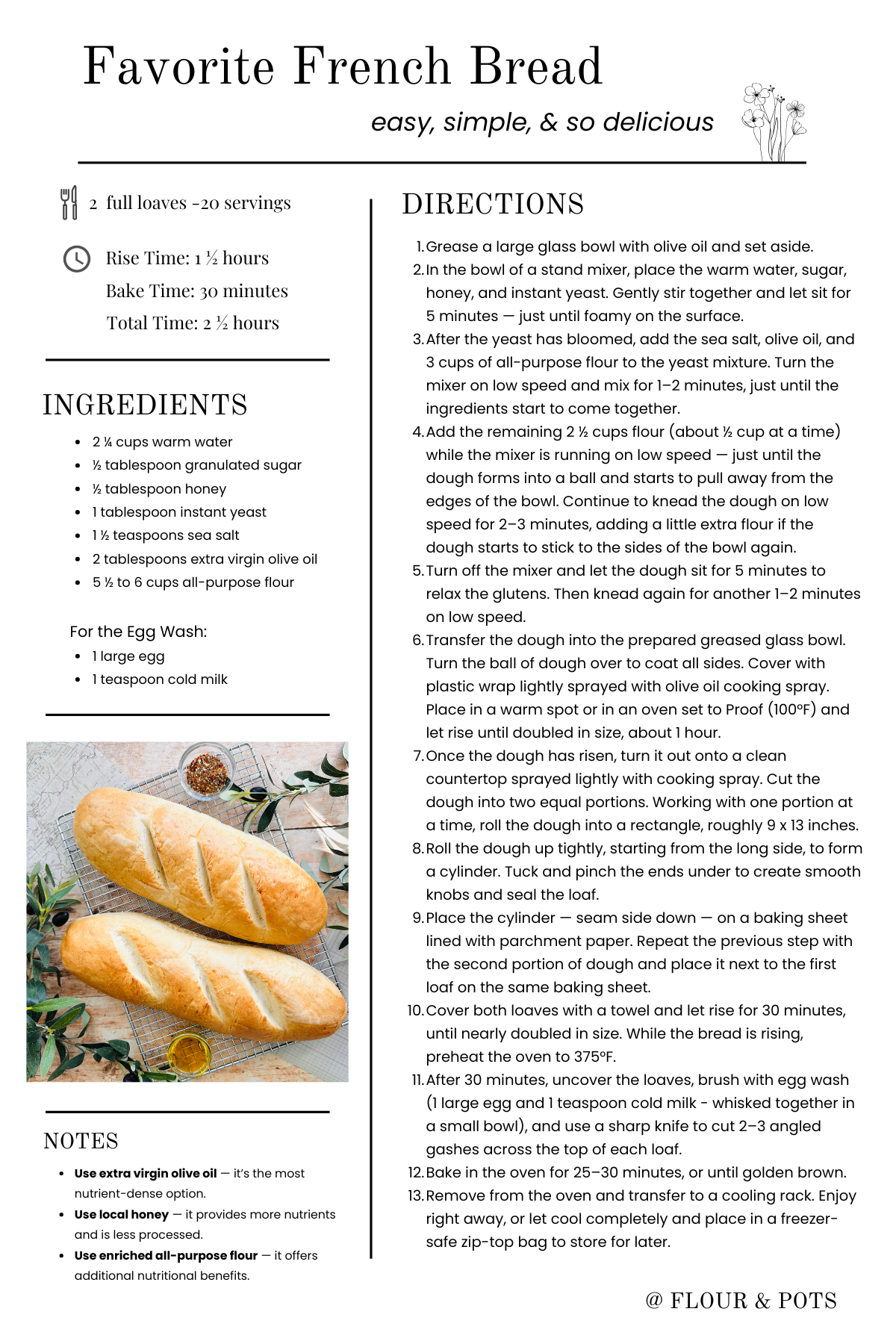
The Favorite French Bread
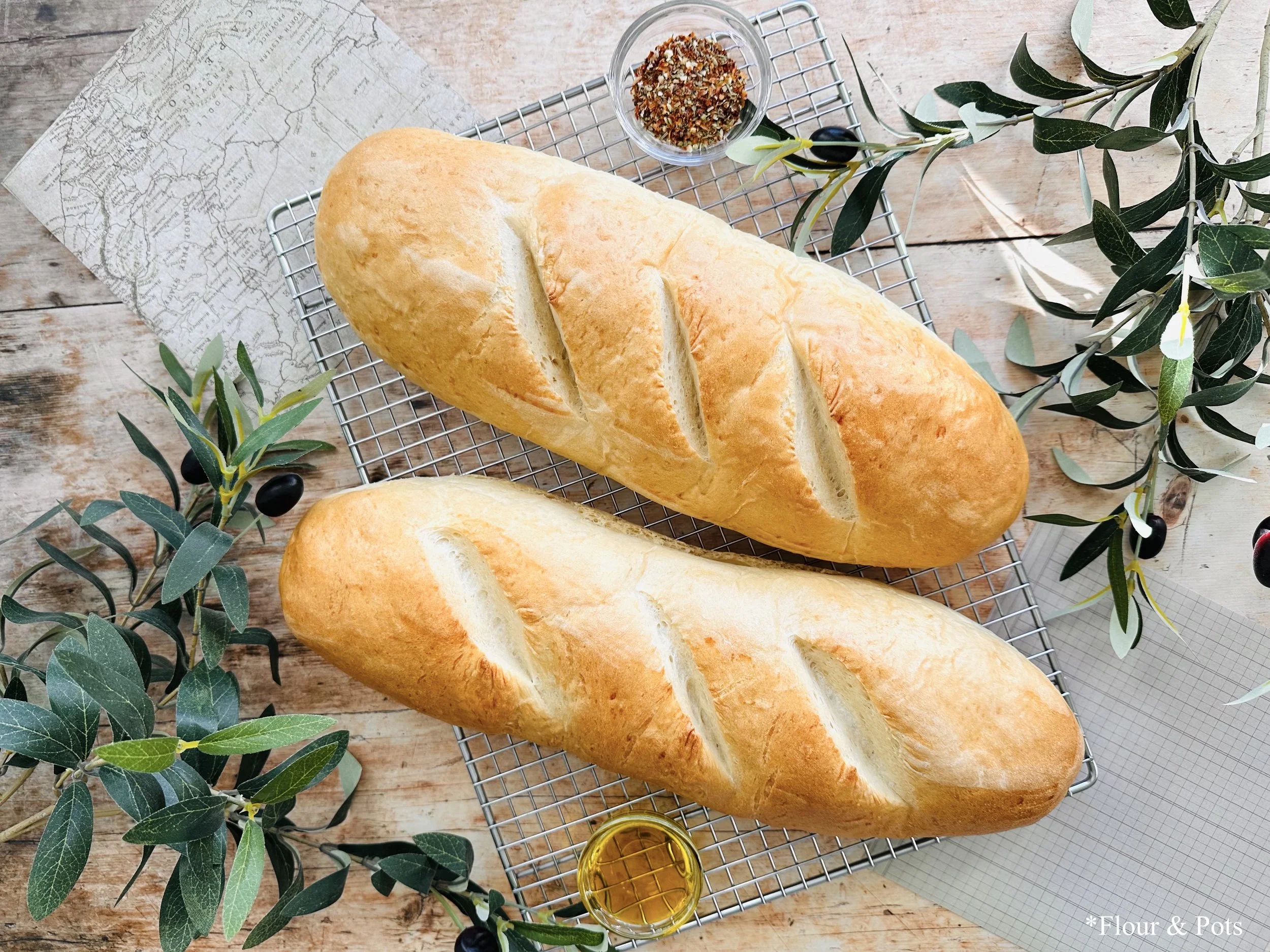
What’s better than a loaf of fresh bread straight from the oven — warm, comforting, and making the whole house smell like a local bakery? Ah… nothing!
This French bread is light, doughy, and pillowy soft. It uses simple ingredients, sweetened with a little sugar and a little honey to balance out the subtle sweetness in these loaves. Plus, there’s no butter — just rich extra virgin olive oil, full of beneficial antioxidants and heart-healthy fats. Now that’s bread that will make you feel good about eating it with just about anything!
We all know that a complete Italian meal, a cozy soup lunch, a breakfast toast, a cheesy sandwich, and everything in between needs that perfect bread to make it truly memorable. That’s why I wanted to create a bread that’s simple in ingredients, acts as a mellow base for so many recipes, and has that dreamy texture — doughy yet airy — that makes every bite irresistible.
I’ve tested and made this recipe probably 40–50 times over the last couple of years, and this one is the best version! I love incorporating natural sweeteners, extra virgin olive oil, water, and simple ingredients into bread recipes — to make them healthier, more comforting, and just as delicious for all of you out there. So, I hope you enjoy this and find a little baking therapy in this French bread recipe!
Why We Need Bread
Bread is a staple of life — and our bodies really do need carbs to provide essential energy to perform everything required of us every day. The whole fad of no bread, no carbs? I’m sorry, but it’s just not sustainable or logically balanced.
Nutritionally, the body needs the complex and simple carbohydrates (sugars) that bread provides. Bread acts like a sponge, absorbing extra acids and gastric juices in the stomach to help break down the foods we eat.
And the right types of bread — especially wheat, whole grain, and homemade varieties — provide fiber to keep the digestive system functioning properly, along with vitamins that support essential body systems. Some breads even add extra protein that helps the body build and repair muscles. So not only does bread fuel you with energy to move and exercise, but it also helps your body recover afterward.
The key to eating bread is to avoid overly processed options (especially store-bought white bread), focus on wholesome ingredients (like wheat and whole grains), and, whenever possible, make your own homemade bread. It’s filled with simple, pronounceable ingredients and typically less sugar — making it a far healthier (and tastier!) addition to any meal.
Why This French Bread Is So Good
Honey + Sugar:
I’ve played with multiple versions of this bread over the years, and this one is the keeper! One reason this version works so well is that I found the perfect balance between honey and granulated sugar as the sweeteners and yeast activators.Originally, I used only sugar — but I wanted to make the bread a little healthier by reducing the total sugar and adding a natural sweetener to it. When I tried just honey, though, the bread turned out too dense and chewy, not rising the way I wanted.
Finally, I found the magic combo: a mix of sugar and honey. By splitting a smaller total amount between the two, the bread became just perfect — soft, flavorful, and easy to make without worry.
Sugar helps the yeast activate and rise more quickly, making this a go-to bread for any occasion. Honey, on the other hand, adds a richer, caramelized flavor and a touch of natural sweetness. Together, they create a wonderfully elevated bread that any baker — beginner or experienced — can make with confidence!
It’s Simple:
Sometimes bread can feel intimidating, but this recipe is actually very approachable. By using a stand mixer - it does all the mixing and kneading for you, giving consistent results every time. It also frees you up to multitask with kids, housework, or anything else that needs your attention while your dough comes together.The rise time isn’t long either — about 1 hour and 30 minutes total, thanks to instant yeast and the oven’s proof setting. That means you can make this bread more spontaneously — perfect for quick weeknight dinners or special occasions.
And honestly, the bread does most of the work for you! You just combine the ingredients, let it rise, roll it up, rise again, and bake. I’ve included clear, easy-to-follow instructions so you can make this bread effortlessly — while impressing everyone with your homemade bread-baking skills. 😊
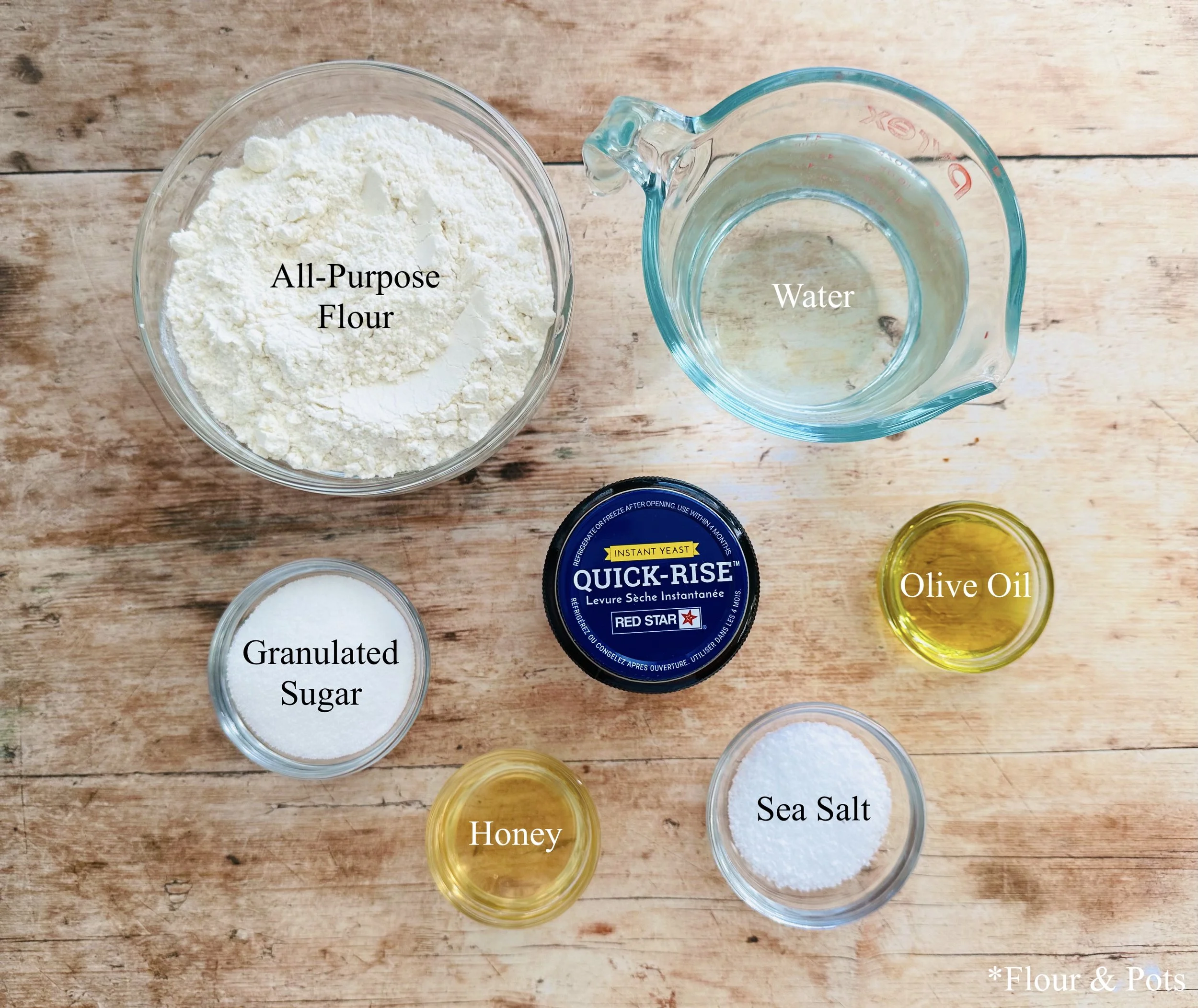
Ingredients:
Warm water
Granulated sugar
Honey
Instant yeast
Sea salt
Extra virgin olive oil
All-purpose flour
For the Egg Wash:
Egg
Cold milk
🥖 Simple Homemade French Bread Instructions For This Recipe
Prepare the Bowl
Grease a large glass bowl with olive oil and set aside.
Activate the Yeast
In the bowl of a stand mixer, place the warm water, sugar, honey, and instant yeast. Gently stir together and let sit for 5 minutes — just until foamy on the surface.
Mix the First Ingredients
After the yeast has bloomed, add the sea salt, olive oil, and 3 cups of all-purpose flour to the yeast mixture. Turn the mixer on low speed and mix for 1–2 minutes, just until the ingredients start to come together.
Add Remaining Flour and Knead
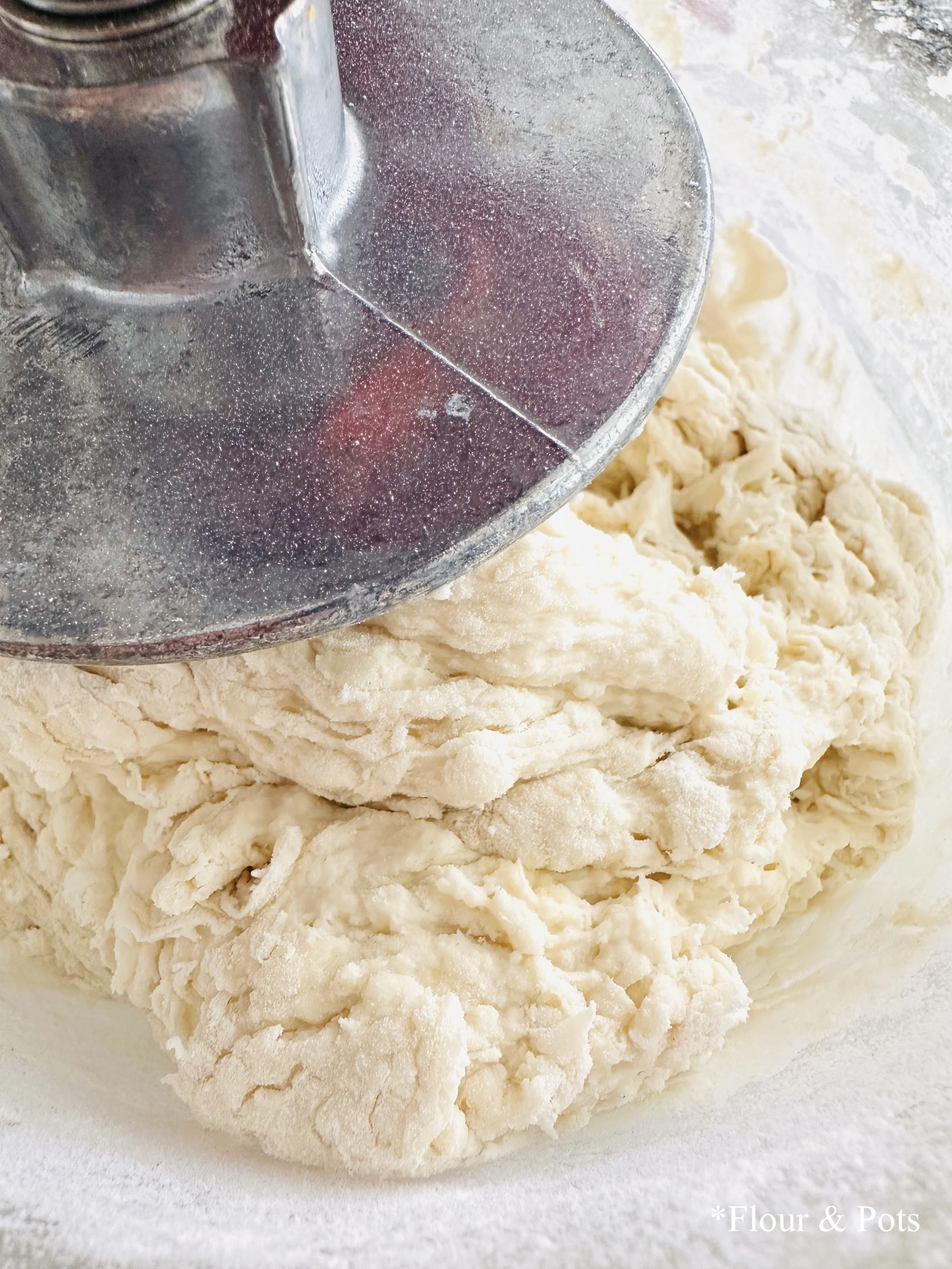
Add the remaining 2 ½ cups flour (about ½ cup at a time) while the mixer is running on low speed — just until the dough forms into a ball and starts to pull away from the edges of the bowl. Continue to knead the dough on low speed for 2–3 minutes, adding any extra flour if the dough starts to stick to the sides of the bowl again.
Rest and Knead Again
Turn off the mixer and let the dough sit for 5 minutes to relax the glutens. After the 5 minutes - knead again for another 1–2 minutes on low speed.
First Rise
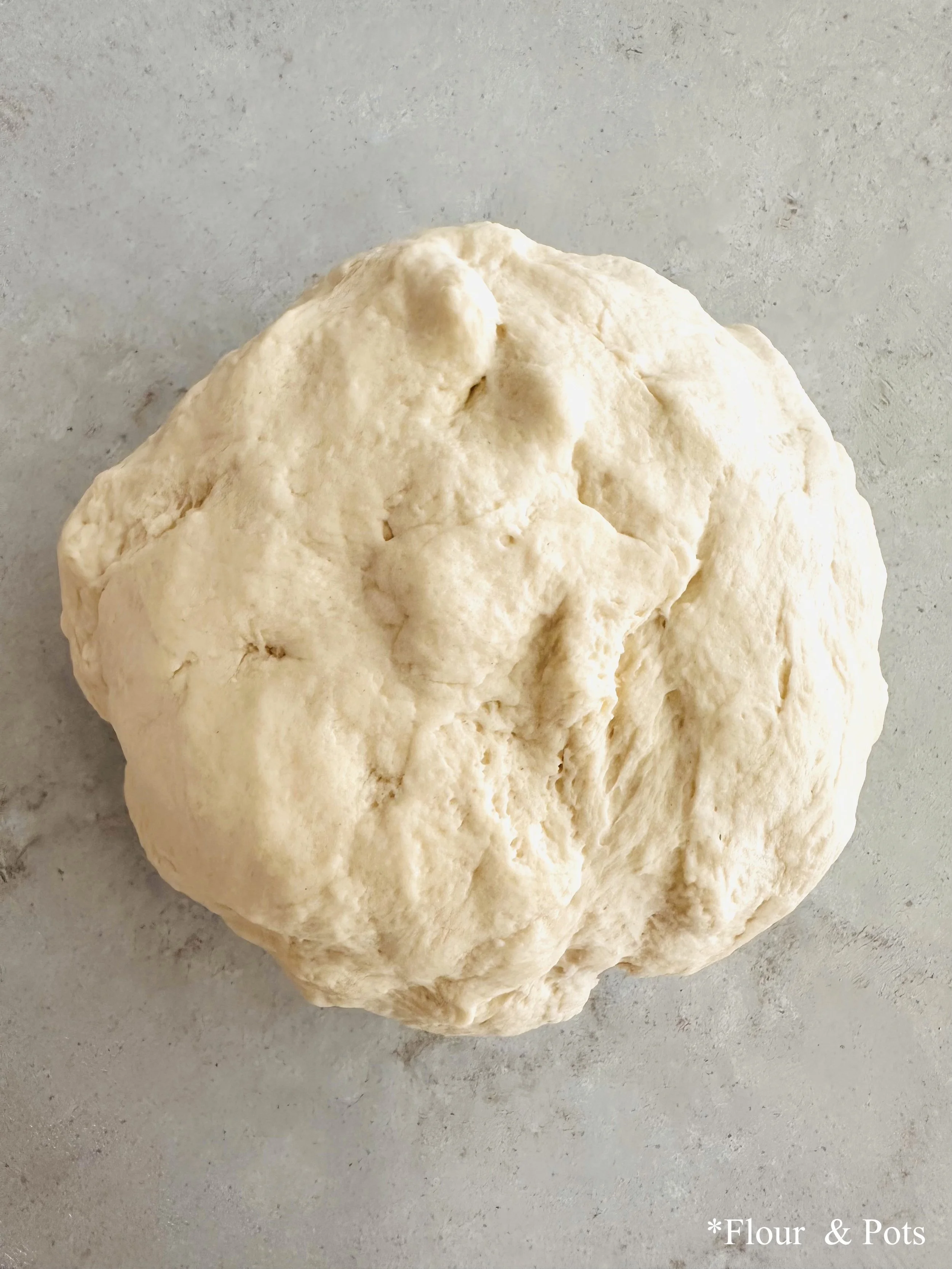
Transfer the dough into the prepared greased glass bowl. Turn the ball of dough over to coat all sides. Cover with plastic wrap lightly sprayed with olive oil cooking spray or any cooking spray. Place in a warm spot or in an oven set to Proof (100°F) and let rise until doubled in size, about 1 hour.
Step 7: Shape the Loaves
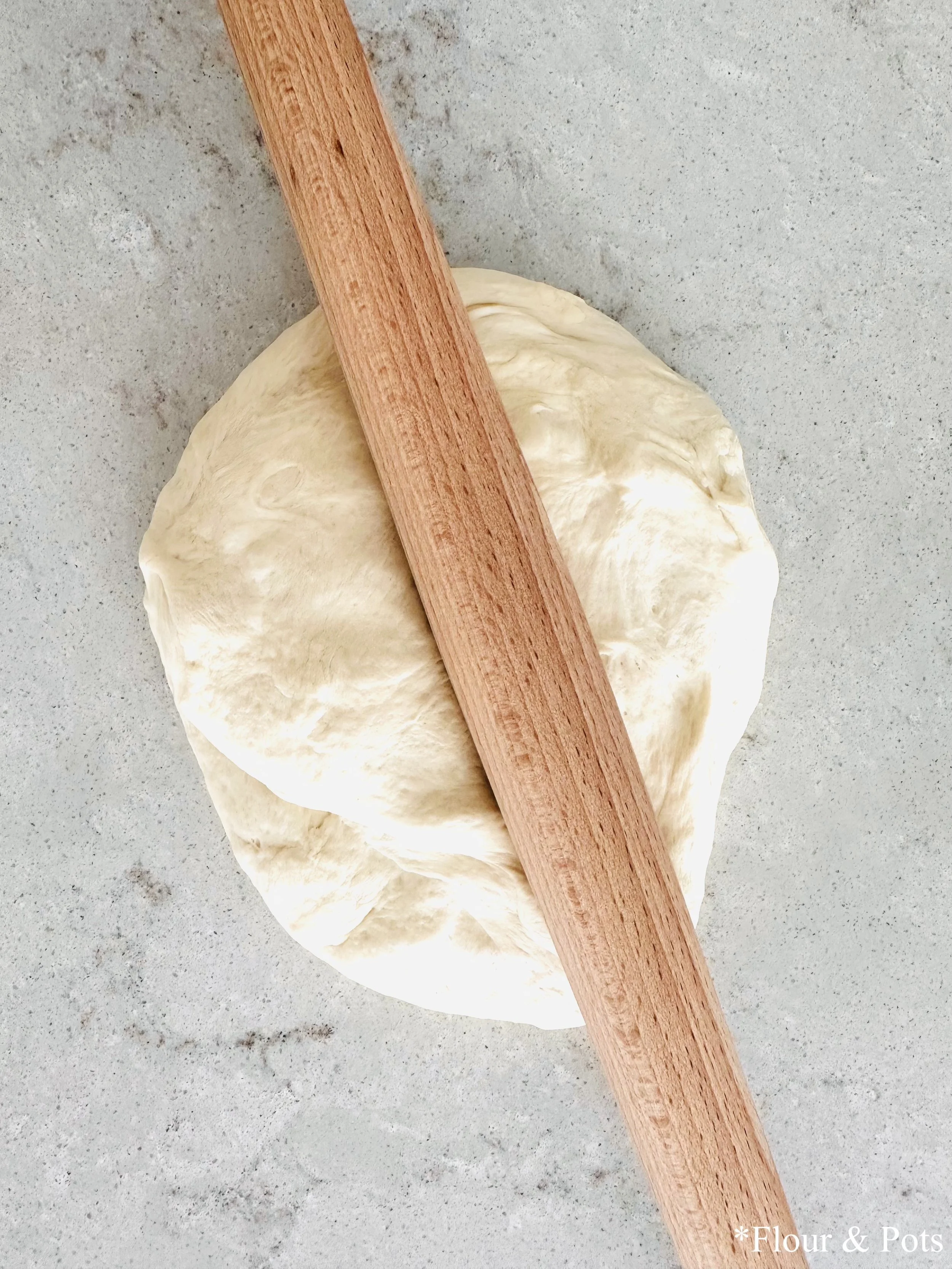
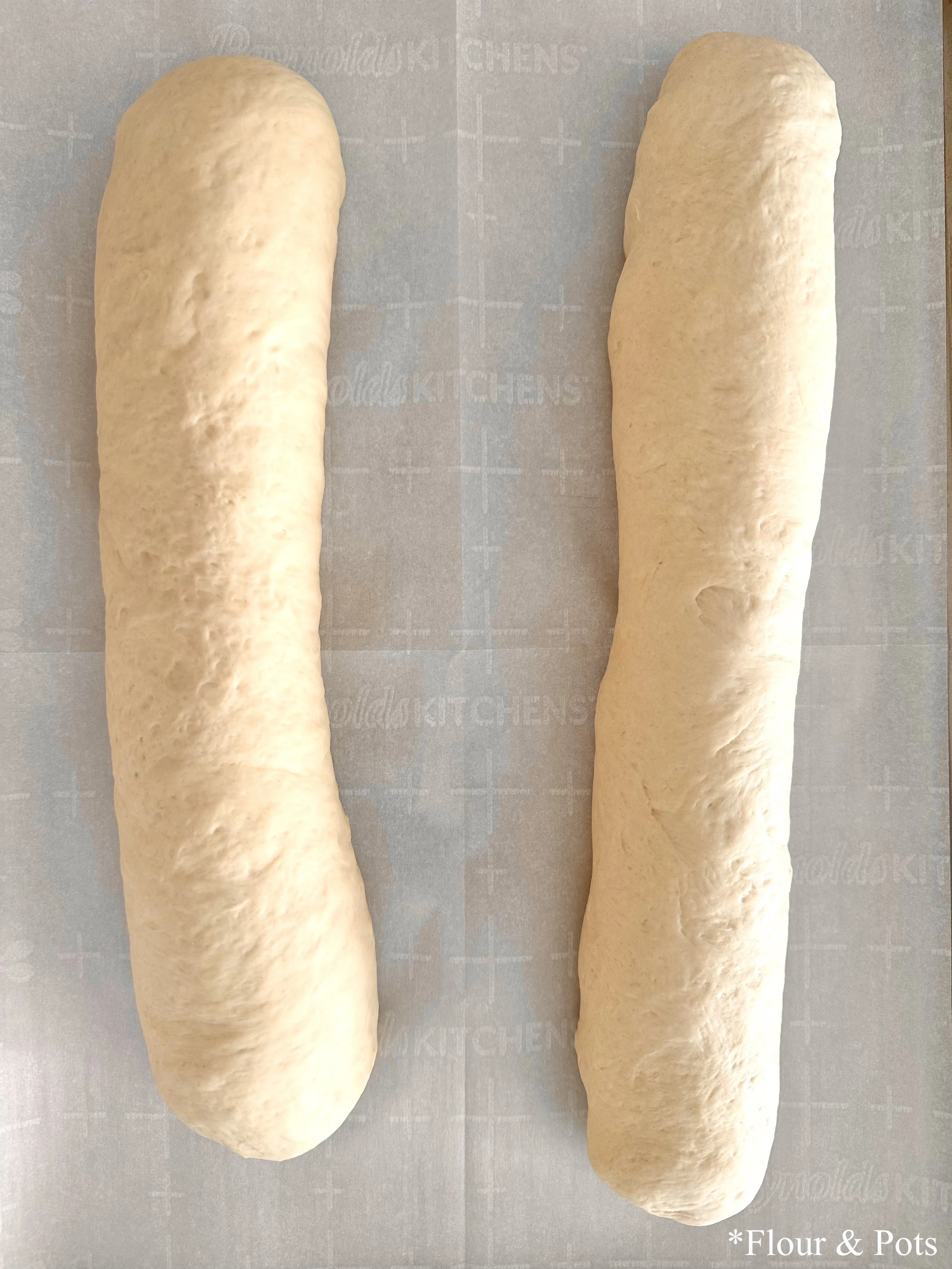
Once the dough has risen, turn it out onto a clean countertop sprayed lightly with cooking spray. Cut the dough into two equal portions. Working with one portion at a time, roll the dough into a rectangle, roughly 9 x 13 inches. Roll the dough up tightly, starting from the long side, to form a cylinder. Tuck and pinch the ends under to create smooth knobs and seal the loaf.
Prepare for Baking
Place the cylinder — seam side down — on a baking sheet lined with parchment paper. Repeat the previous step with the second portion of dough and place it next to the first loaf on the same baking sheet. Cover both loaves with a towel and let rise for 30 minutes, until nearly doubled in size. While the bread is rising, preheat the oven to 375°F.
Score and Bake
After 30 minutes, uncover the loaves, brush with egg wash (1 large egg and 1 teaspoon cold milk - whisked together in a small bowl), and use a sharp knife to cut 2–3 angled gashes across the top of each loaf. Bake in the oven for 25–30 minutes, or until golden brown.
Cool and Enjoy
Remove from the oven and transfer to a cooling rack. Enjoy right away, or let cool completely and place in a freezer-safe zip-top bag to store for later.